
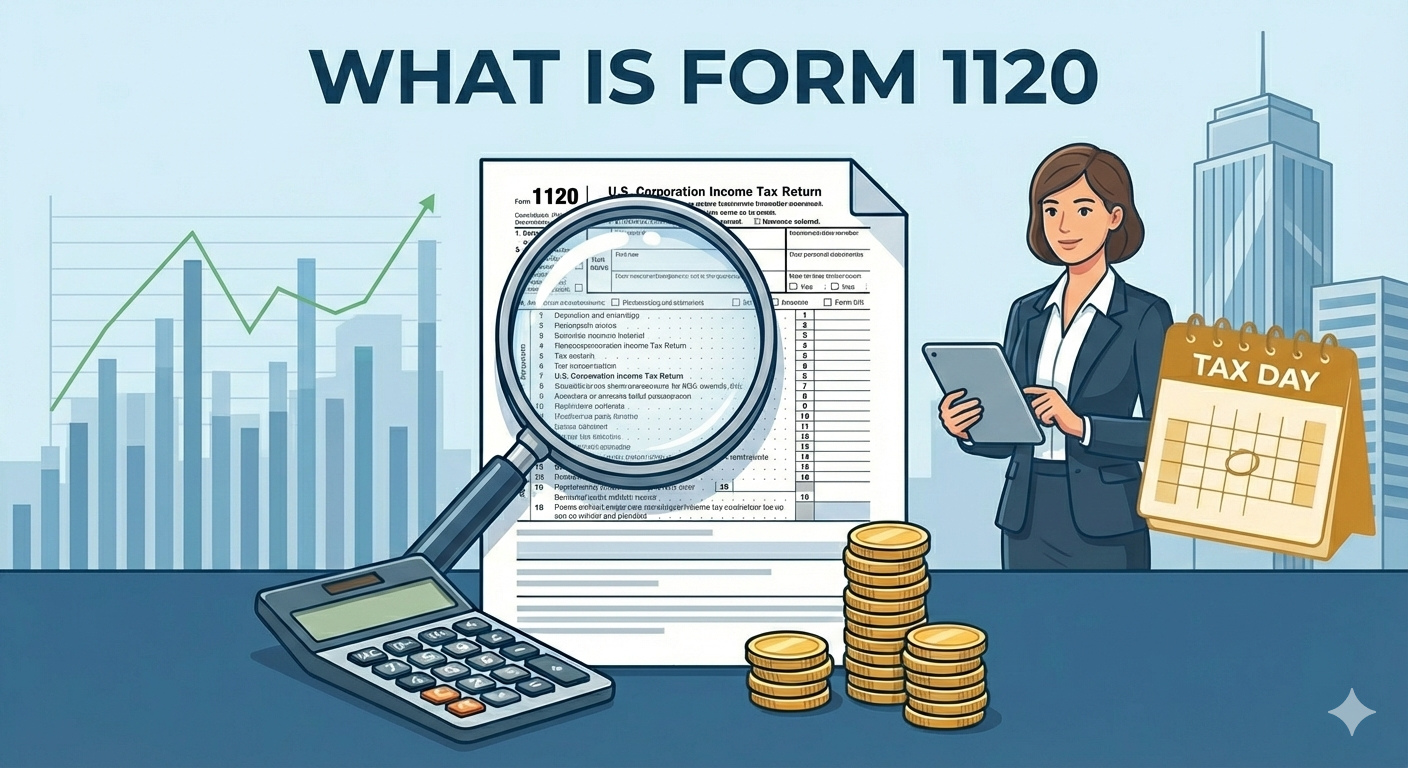
If you run a corporation in the United States, understanding Form 1120 is essential for staying compliant with IRS tax rules. Many business owners get confused about who needs to file, what information it reports, and when it’s due. This guide will explain what Form 1120 is, who must file it, what it includes, and why it matters for your business.
Form 1120, officially called U.S. Corporation Income Tax Return, is the IRS form used by corporations to report income, gains, losses, deductions, and credits. Essentially, it is the corporate equivalent of an individual’s Form 1040, allowing the IRS to determine how much tax a corporation owes.
This form is primarily used by:
It is not used by S corporations, which file Form 1120-S instead.
Corporations that must file Form 1120 include:
Key point: Even if your corporation has no income, filing may still be required to maintain good standing with the IRS.
Form 1120 collects comprehensive financial information about a corporation. Key sections include:
The IRS uses this information to calculate corporate income tax liability and ensure compliance with U.S. tax laws.
Missing the deadline can result in penalties and interest, even if the corporation owes no tax.
Accurate filing is essential to avoid IRS penalties and maintain corporate compliance.
Filing Form 1120 correctly is important for:
Corporations with complex operations, international income, or multiple subsidiaries may benefit from professional help, including offshore accounting services, to ensure accurate reporting and compliance.
Understanding what Form 1120 is and how it works is crucial for any corporation operating in the U.S. Proper filing ensures your business remains compliant, avoids unnecessary penalties, and accurately reports its income and deductions.
If your corporation has multiple revenue streams, international transactions, or complicated deductions, working with a qualified accountant or offshore accounting service can streamline the filing process and provide peace of mind