
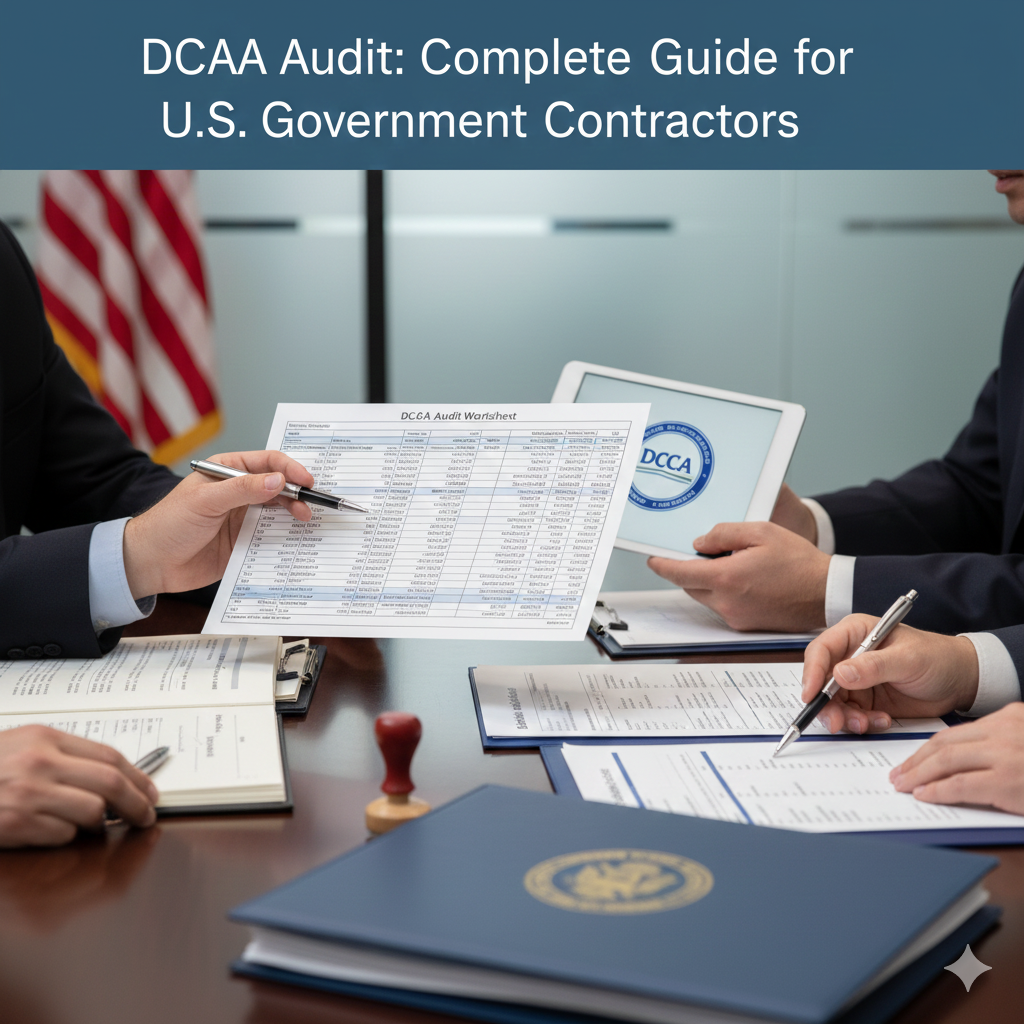
A DCAA Audit is a formal financial and accounting review conducted by the Defense Contract Audit Agency (DCAA), a U.S. Department of Defense (DoD) agency. Its purpose is to ensure that government contractors comply with Federal Acquisition Regulation (FAR), Cost Accounting Standards (CAS), and other federal cost principles when doing business with the U.S. government.
For defense contractors, federal suppliers, and government service providers, passing a DCAA audit is not optional, it is essential for winning contracts, receiving payments, and maintaining eligibility for future federal work.
A DCAA audit is an independent examination of a contractor’s accounting system, financial records, labor charging practices, and internal controls. The audit ensures that:
DCAA audits are commonly required before contract award, during contract performance, and after contract completion.
A DCAA audit is required for any business that:
Industries commonly subject to DCAA audits include:
Even small businesses and startups bidding on their first government contract may be subject to a DCAA audit.
Understanding the different DCAA audit types helps contractors prepare properly.
Evaluates whether your accounting system is adequate before contract award.
Key focus areas:
This is one of the most critical audits for new government contractors.
Reviews actual costs claimed during the fiscal year.
Key focus areas:
Failure here can result in cost disallowances and repayment demands.
Evaluates projected costs and pricing proposals.
Used to:
Unannounced audit to verify:
Improper labor charging is one of the most common DCAA violations.
Conducted at the end of a contract to finalize costs and payments.
A DCAA audit typically examines:
Every cost charged to the government must be traceable, documented, and justified.
To pass a DCAA audit, your accounting system must:
Many contractors fail audits due to improper system setup, not fraud.
Based on real-world audit outcomes, common issues include:
Even minor documentation gaps can lead to audit failures or delayed approvals.
A pre-audit review helps identify gaps before the official audit.
Document policies for:
Employees must understand DCAA rules, especially timekeeping compliance.
While DCAA does not “certify” software, systems must support:
Experienced CPAs and compliance advisors help avoid costly mistakes.
Failing a DCAA audit can result in:
Early compliance is far less expensive than post-audit remediation.
DCAA audits are highly technical and governed by evolving federal regulations. General accounting knowledge is not enough. Contractors benefit from advisors with:
This expertise strengthens compliance, credibility, and long-term contract success.
Is a DCAA audit mandatory?
Yes, for most cost-type and time-based federal contracts.
How long does a DCAA audit take?
Anywhere from a few weeks to several months, depending on audit scope.
Can small businesses pass a DCAA audit?
Yes, size does not exempt companies from compliance requirements.
Does DCAA approve accounting software?
No, but your system must meet DCAA functional requirements.
At CP Charles CPA, we bring deep experience in DCAA audit preparation, FAR compliance, and government contractor accounting. Our team works closely with U.S. contractors to identify risks early, implement DCAA-compliant systems, and confidently navigate audits with clarity and control. Whether you are preparing for your first pre-award audit or responding to ongoing DCAA scrutiny, having the right advisory partner can make all the difference.
With proactive planning and expert guidance, DCAA audits become manageable, not disruptive. CP Charles CPA is committed to helping government contractors stay compliant, audit-ready, and positioned for sustainable growth in the federal marketplace.